Motor/Generator Testing & Commissioning
Electrical maintenance programs are designed to increase equipment promptness and uptime while decreasing capital operating cost. Electric Motor Testing is usually the first thing to be sacrificed when cutting back on operational expenses.
Motor/Generator Testing & Commissioning
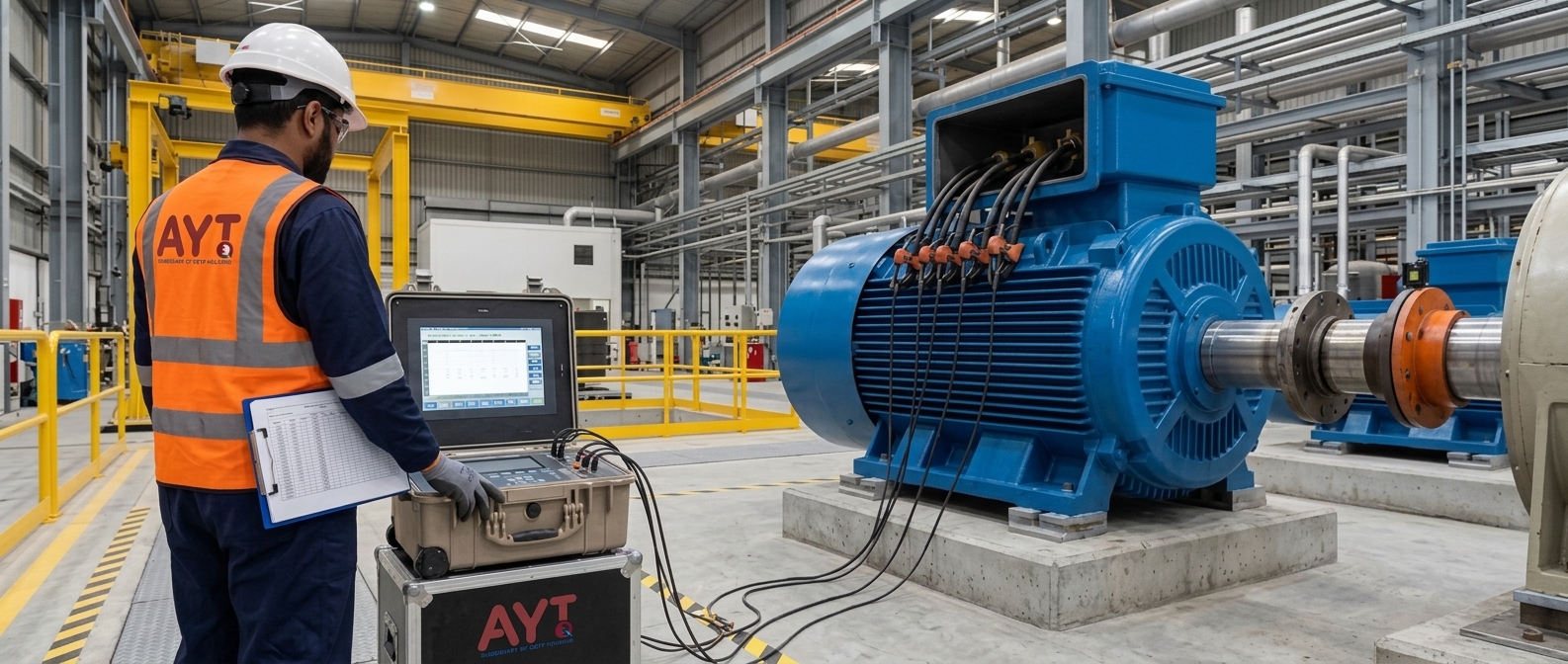
Electrical testing and condition assessment for motors and generators in service, using online signature analysis and the full offline diagnostic suite.
Why motor testing earns its place
Electrical maintenance programmes exist to raise availability and uptime while bringing operating cost down. Motor testing is usually the first thing cut when budgets tighten, which is the wrong order — a planned electrical testing scheme is a large part of what keeps a plant reliable.
Roughly 48% of motor failures are electrical in origin. Of those, around 36% are winding problems and 12% are rotor problems. The remaining 52% are mechanical. Testing that covers both sides is the only way to see a failure coming.
How winding failures develop
Winding defects come from contamination, insulation ageing, thermal overload, power surges and damaged materials. They begin as energy crossing a small insulation fault, often moisture, which separates at least one turn. That creates additional stress and raises temperature locally, which widens the fault, which raises the temperature further, until the winding fails. Caught early it is a repair. Caught late it is a replacement and an outage.
Online testing
- Electrical signature analysis (ESA / MCSA)
- Vibration and acoustic analysis
Online testing is carried out with the machine running, so nothing has to come out of service to be assessed.
Offline testing
- Winding resistance measurement
- Insulation resistance and polarisation index
- Tan delta and capacitance analysis
- Phase resolved partial discharge analysis
- Non-linear insulation behaviour
- Polarisation and depolarisation analysis